“I don’t like it here anymore. I just don’t.”
From the Mini Mall to Metropolitan Avenue to Bushwick – 20 years of Williamsburg retail encapsulated.
“I don’t like it here anymore. I just don’t.”
From the Mini Mall to Metropolitan Avenue to Bushwick – 20 years of Williamsburg retail encapsulated.
Specifically, “failed” waterfront designs in Greenpoint and Williamsburg. As the article points out, despite a 2009 City Planning text amendment to encourage more creative designs for the required waterfront open spaces, very few developers have actually done so.
Domino being the exception in terms of creativity, and control – but they are fast becoming the rule. I have seen at least three recent waterfront proposals that significantly break from the esplanade-and-railing approach to waterfront design (what Greenpoint Landing is being criticized for in the article and in the Greenpoint community). Developers are starting to recognize the value in creating quality open spaces on the water, and in providing direct access to the water (something Domino does not do, but for site-specific reasons).
So why weren’t developers more creative before? I suspect that part of the reason is that the vast majority of the Greenpoint-Williamsburg waterfront constructed to date was done so under the old rules. That is the case for Northside Piers, The Edge (pretty sure) and The Greenpoint. I don’t know what Greenpoint Landing’s excuse is, though.
(Sidenote – 15 years in, it is kind of remarkable that only these four waterfront developments have been built as part of the 2005 rezoning. And only two are actually complete. Greenpoint – get ready…)
The “other” Con Ed site in Williamsburg has apparently sold. This is the former BRT Power Plant site, on the south side of Division Avenue on Wallabout Creek. An important site, and pretty much the southern terminus of a potential continuous waterfront open space extending from Wallabout Creek to Newtown Creek.
15 new cases in Williamsburg. I have not heard that the outbreak has extended beyond the Orthodox population, but am curious as to how much of the rest of the North Brooklyn is unvaccinated and therefore vulnerable.
“Creator and operator of active lifestyle facilities”?
Anyhow, nice addition to the area.
Something that didn’t exist three months ago has disappeared and this has a big impact on development in Greenpoint. Unless you read the article, in which case the overall response seems to be “Meh”.
I guess the architects are drawing on the aesthetics of the existing building on the site?
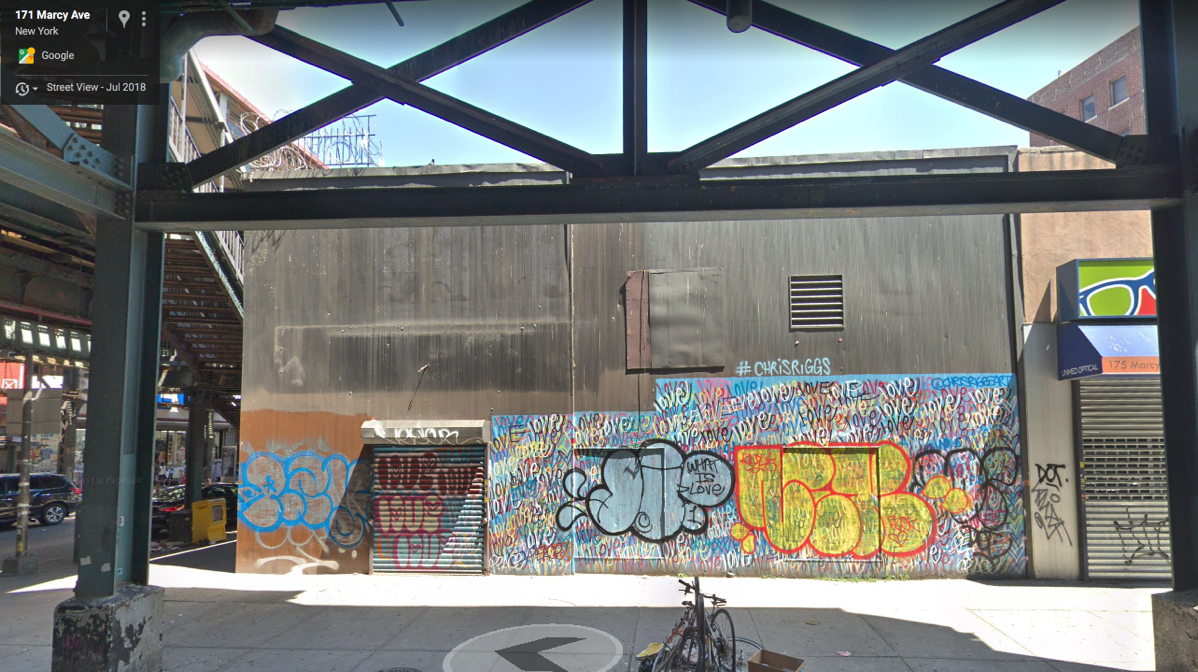
302 Broadway (existing condition)
New exhibition opening in March at the Brooklyn Historical Society – On the (Queer) Waterfront: The Factories, Freaks, Sailors & Sex Workers of Brooklyn, based on a new book by Hugh Ryan.
I’ve always wanted to see this connection between Greenpoint and Hunter’s Point reestablished. The article mentions the Vernon Avenue Bridge (see below), which was constructed in 1905. But a bridge connecting Manhattan Avenue to Vernon Avenue was in place at least as far back as the mid-1850s, when Greenpoint and Hunter’s Point were being developed. Eliphalet Nott was involved in the development of both neighborhoods, which is apparent looking at the very similar building stock in both areas.
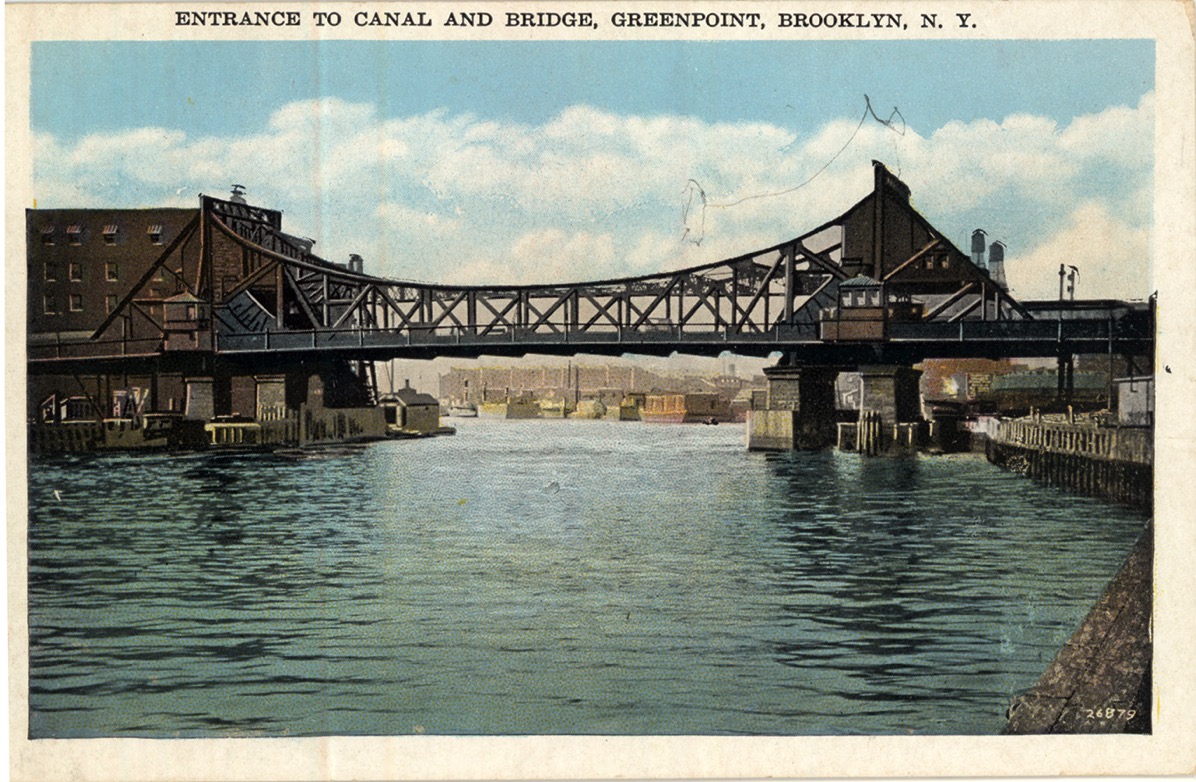
Vernon Avenue Bridge, 1905
Credit: Novelty Theater