
112 North 6th Street Followup

In the Brooklyn Paper, Aaron Short has this quote from one of the few legal tenants in the building:

“It’s horrible!” said Ralph De La Rosa of Go Yoga, which occupies a first-floor business space. “The city should be doing something else instead of vacating them in this way.”

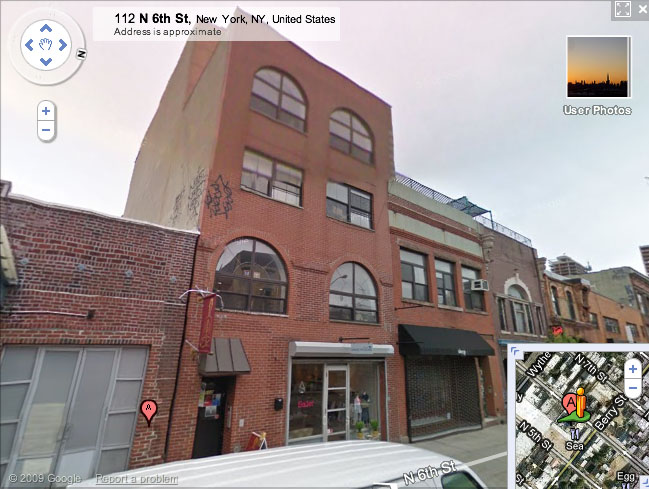
Let’s review, shall we. This is a six-story building with 12 “apartments”. There are no sprinklers (as is required for hotels and other transient uses), there are no secondary means of egress (as is required for hotels and other transient uses). Most of the four-story addition is constructed of combustible wood framing. All of the DOB permits for this building describe a three-story commercial building, so the top three stories seem to be some form of immaculate construction (DOB issued a violation for the construction of the third story in 2002, but somehow missed the fourth, fifth and sixth). There is no certificate of occupancy (so technically, even Go Yoga is in there illegally).

What else, exactly, would you have the city do? Other than the fact that a lot of people are out of their (very expensive) home, what is horrible about this whole episode is the fact that the city didn’t do something about it eight years ago.


✦✦

Illegal Hostel at 112 North 6th Closed Down

112 north 6th.jpg

There seems to be a trend developing. Just the other day, Miss Heather reported on a potentially illegal hostel operating (or about to operate) out of a former glove factory at 300 Graham Avenue. A few minutes ago, I received a press release from Assemblyman Joe Lentol’s office saying that another illegal hostel – this one operating at 112 North 6th Street – had been closed down and vacated by the Department of Buildings. According to Lentol’s office, the six apartments in the building were being used to house up to 16 “guests” each – for a potential capacity of 192 people.

A few things to note here. First, this is not a new trend. There have been reports of condos and apartments operating as hostels, B&Bs, hotels, etc. for a few years now. It is a sign of the times, as owners find themselves unable to sell condos. But given the level of rents in the neighborhood, it is also a sign of greed.

Second, there is a reason why DOB should be cracking down on this. Apartments are not built to the same code as transient hotels. Hotels require more fire protection and, importantly, more and better marked egress. Putting 192 transient residents into a non-fireproof building designed for 20 or 30 residents at the most is a recipe for disaster.

Third, having spent many an afternoon at Sweetwater Tavern watching the “conversion” of this building from a two-story commercial structure to it’s current state, the fact that there something fishy going on here is the least surprising news in the neighborhood. (The most surprising news is that this building is still standing.) A cursory look at the DOB records shows that this building has no CO, and that the conversion (started in 1998) wasn’t even for residential use. In other words, it is not legal for anyone to be living here.

UPDATE: Miss Heather has a lot more details, including screen shots of the advertising for the hostel (note that the picture they use to advertise themselves is not 112 North 6th Street).


✦✦

Vandalism, Assassination Threats Follow HCR

Last Thursday [Rep. Louise Slaughter (D-NY)] received a chilling recorded message at her campaign office. “Assassinate is the word they used…toward the children of lawmakers who voted yes.”

I see the Blackshirts are out in force.

Without Transit Improvements, NYC Growth Will Stagnate

Over at the Huffington Post, John Petro looks at the transit impacts of the “New Domino”:

It is estimated that an underground parking space in New York City costs between $30,000 and $50,000. Even at the lower estimate, that’s $50 million dollars that the developer plans to spend building underground parking. What if instead of providing so much parking, the developer only built half of the parking and diverted the rest of the money to improving transit service? What about an express bus service during peak hours from the development to, say, Union Square? Radical thinking, perhaps, but without innovative solutions, New York City’s growth will stagnate.

Shuttle buses and water taxis are not the answer. The former just make it more efficient to bring the overcrowding to the subway, while the latter will peel off at best 75 to 150 passengers per hour in good weather (and the City has said it won’t be built at the Domino site anyway).

(And for the record, New Domino’s reps estimated the average cost per space at $50k, so the total cost of their structured parking is more like $85 million.)


✦✦

Levin Sour on Domino

This is a potential game-changer:

On behalf of Council Member Stephen Levin, I want to thank the Borough President for giving me the opportunity to testify today on CPC’s proposal for the Domino Sugar site. Council Member Levin would like to express his full support for Community Board One’s recent recommendation of Disapproval with Modifications for this project. [emphasis added]

The Community Board expressed profound concerns over the project’s overwhelming height and density and the effect that this would have on the surrounding community and the current infrastructure. Specifically, the Board cited the strain that the project would bring to the already inadequate transit options for the area, the strain on local traffic and CPC’s requests for the maximum allowed on-site parking.

The overall reduction in the ratio of open space per resident in the area and the unmitigated shadow effects of the northernmost towers on Grand Ferry Park were also cited by the Board as grounds for disapproval. For these reasons and others, the Council Member supports the Board’s recommendation. The project is simply too big. CPC’s plan would introduce over 6,000 new residents to the neighborhood – a nearly 25% population increase for the ½ mile area surrounding the site.

Council Member Levin does not wish to minimize CPC’s impressive commitment to 660 units of affordable housing. Affordable housing is desperately needed in this community and CPC has worked hard to recognize this need. The inclusion of community space within the project is also to be commended. Furthermore, Councilman Levin appreciates CPC’s involvement with, and respect for, the Williamsburg community throughout this process. Nonetheless, unless the issues of height and density, transportation, and open space, among others, are addressed, Council Member Levin cannot support the plan for the Domino Sugar site as currently proposed. Thank you for your time.

That was Councilmember’s Steve Levin’s testimony at last night’s Borough President’s hearing on the Domino Rezoning (as read by Levin’s legislative director, Ashley Thompson).


✦✦

Faith No More to Play Williamsburg Waterfront

OSA announced a series of paid concerts to be held at East River State Park this summer. The series kicks off on July 5 with a reunited Faith No More, with all proceeds for the paid events benefitting OSA and their work to preserve and create parks in North Brooklyn. (These concerts are in addition to the free “Pool Party” concerts, of which there will be eight this summer.)

CB1 Says Yes to Williamsburg Bridge Park


View WBP in a larger map

Last night, long after the Domino drama was over, Community Board #1 passed a resolution calling on the City to turn the DOT-operated property underneath the Williamsburg Bridge (in green on the map) into a public park. As I wrote yesterday, this is not a new idea (in fact, the Williamsburg 197a plan called for this same thing 10+ years ago). But it is an idea whose time has come.

Coincidentally, City Planning did a presentation to the Board last night on their development of a 10-year comprehensive waterfront plan. They are in the midst of a survey of the entire NYC waterfront (the last such survey was in 1992). Two of the City’s stated goals in waterfront planning are “expanding public access to the waterfront” and “enlivening the waterfront with attractive uses, high-quality public spaces, and publicly oriented water-dependent uses, integrated with adjacent upland communities”.

“Williamsburg Bridge Park” is a 700′-long site located between South 5th Street (the southern boundary of the Domino site, in red above) and Broadway. The property includes a large amount of paved-over open space directly on the river, so it could be turned into an ersatz esplanade at relatively little expance. The property also includes a two-story building between South 6th and Broadway and a couple of smaller buildings directly under the Williamsburg Bridge, any of which could be repurposed for recreational uses. The property is currently used by DOT, but there are no “water-dependent” uses – the land is just left over space from the old Brooklyn Ferry Company (which ran the Broadway Ferry from this site) that would be put to better use a public park.


✦✦